I’m not sure if anyone noticed, but the US stock market (as measured by the Dow Jones Industrial Average) just hit an ALL-TIME HIGH! Similarly, the broader S&P 500 index is nearly there as well, sitting just about 1% below its record high.[1]
As a friend of RZH, you know this comes as no surprise to me. This contrasts with the media’s reaction, which has been one of surprise, especially given their focus on negative narratives during the S&P 500’s impressive 34% total return since last fall.[2] (My last newsletter lists many of the reasons you were told not to invest in 2023)
It’s not surprising that Wall Street banks have been relatively quiet about this as well – considering their forecasts[3] for the S&P 500’s 2023 closing (The Index reached 4,738 as of Thursday, December 14, 2023)
Barclays: 3,675
Société Générale: 3,800
Morgan Stanley: 3,900
UBS: 3,900
Citibank: 3,900
Bank of America: 4,000
Goldman Sachs: 4,000
HSBC: 4,000
Credit Suisse: 4,050
RBC: 4,100
JPMorgan: 4,200
Jefferies: 4,200
BMO: 4,300
Wells Fargo: 4,400
Clients of RZH participated fully in this rebound. However, the last 14 months have served as a stark reminder of the risks of hesitancy, as the average investor probably thought that it was best to “wait for the dust to settle.”
Impressively, this recovery occurred WITHOUT government stimulus, lower interest rates, or corporate tax cuts. It took place amidst looming recession fears, the highest interest rates in two decades, and inflation levels not seen since the 1970s. Once again, America’s corporations demonstrated their resilience and ability to overcome, innovate, and manage their way through challenging times.
What’s next? Your guess is as good as mine, as we head into a presidential election year which is guaranteed to be a circus. What I do know is that the markets cannot be consistently timed and the economy cannot be consistently forecast. Yet, the enduring strength of equities as the core of your portfolio is undeniable. More importantly, having a thoughtful plan in place makes all the difference when it comes to navigating a period like 2022-2023.
Thank you for entrusting us with your planning and helping steward your important assets. It is an honor and privilege we cherish daily.
The entire team at RZH extends our best wishes to you and your loved ones for a joyous holiday season and a prosperous New Year!
RZH Special Memo – RZH Advisors Selected as 2023 Forbes|SHOOK Top RIA Firm
We are excited to share that RZH Advisors has earned a spot on the prestigious 2023 Forbes|SHOOK list of “America’s Top RIA Firms.” Out of over 15,000 RIA (Registered Investment Advisor) firms nationwide, we have been ranked within the top 1%. This honor reflects our team’s unwavering commitment, hard work and capabilities, as well as the invaluable trust and confidence our clients have bestowed upon us.
At RZH, our goal has always been to deliver tailor-made, thoughtful financial guidance that caters to the distinct needs of each client. Being recognized by Forbes|SHOOK not only celebrates our achievements thus far but also inspires us to continue setting higher standards and help our clients embrace life to the full extent of their wealth.
A heartfelt THANK YOU to our clients for your trust and confidence, which means the world to us. We also wish to express our deepest gratitude to our dedicated team members, whose tireless efforts, great skill, and steadfast dedication to client success are pivotal in attaining this accolade.
To review the complete Forbes|SHOOK list of Top RIA Firms and important ranking methodology please CLICK HERE.
RZH Insights – Giving Thanks While Surrounded by Turmoil
2023 seems to have been an exhausting year in the markets and for the world in general. The Israel-Hamas conflict has cast a dark cloud of uncertainty over the world and challenged the strength and legitimacy of this year’s stock market recovery. The following is a list of challenges the market has contended with in 2023:
Apprehensions surrounding potential government shutdowns
The looming debt ceiling crisis and its implications
A banking sector in turmoil
The relentless grip of inflation
Mortgage rates soaring to a two-decade high
Concerns over BRIC nations and potential dollar devaluation
An alarming spike in crime rates in major US cities
The unexpected downfall of FTX and the broader cryptocurrency market
Issues surrounding open borders and the escalating refugee crisis
Controversies and debates surrounding Trump’s past actions
Allegations of corruption circling the Biden family
The inability of Congress to elect its Speaker
The ever-present shadow of a potential recession
The media, with its penchant for sensationalism, has magnified each of these issues, inducing fear among investors and testing their risk appetite. The phrase “This time is different,” often a red flag in investing circles, has been heard all too frequently this year.
Yet, with all of this negativity and pessimism, the greatest companies have once again shown their resilience, ingenuity and resourcefulness to adapt and overcome these challenges. An index of some of the largest and best-managed companies in the world (the S&P 500) has risen 28% from its low last October and almost 20% this year.1 On January 11th, I wrote “Don’t be surprised… if the markets turn higher well in advance of things settling down. This is normally how market recoveries start as the stock market is famous for generating a strong rally well before a recession is over and before Fed policymakers end their tightening cycle.” Still, it’s a paradox that even with a recent bull market in stocks, the prevailing sentiment among investors feels more bearish. As of this writing, we are only about 5% from the all-time high of the S&P 500.2
Such is the tumultuous journey of a dedicated, long-term equity investor. The entry ticket to an asset class that has historically delivered over 10% annual growth is the constant barrage of market volatility and apocalyptic predictions. Returns are lumpy and they can be discouraging for extended periods of time. Yet, history has shown that disciplined investors, those who eschew market timing and speculation while aligning with knowledgeable financial advisors, have seen their wealth grow exponentially. To wit:
Over the past 50 years, a period that encapsulates the investing lifespan of many reading this memo, the stock market has delivered an average annual return of about 10.3%.3 However, this journey was far from smooth. It was disrupted by 12 bear markets (declines of 20%+), each accompanied by its unique set of doomsday prophecies (aka: “This time is different”). Some of these downturns were particularly brutal, with investors seeing their portfolios decline roughly 50% during the ’73/’74, ’01/’02, and ’07/’08 market crashes. Yet, with all this destruction (12 bear markets and losing half your money three times), $1,000,000 grew to about $133,000,000.4 Yes, rub your eyes, you read that correctly… $133 million!
However, successful investing is not just about waiting it out and staying the course – far from it. I believe there are two overlooked, but vitally important, virtues associated with successful investing and multi-generational wealth creation: Humility and Optimism
Humility entails recognizing our limitations in predicting future events, be it unforeseen events like 9-11, the Financial Crisis of 2008, the COVID pandemic, the Silicon Valley Bank collapse or even Taylor Swift dating Travis Kelce.
Optimism, on the other hand, is an unwavering belief in a brighter future, underpinned by the conviction that challenges are transient and that “this too shall pass.” To grow $1 million dollars into $133 million over the last 50 years all you had to do…was believe in America and our relentless ability to adapt and innovate.
These are obviously learned skills as human nature is not programmed to be so thoughtful and carefree. Our instinct to avoid pain and self-preserve is very strong. These realizations have informed our financial planning and portfolio construction immensely. This is why we spend so much time getting to know each client intimately before crafting a plan for their assets. Our process involves extensive stress testing and scenario modeling. We then incorporate risk reduction redundancies and financial controls into our planning and portfolios. These tools empower us to fulfill our mission of helping our clients embrace life to the full extent of their wealth.
As we finish out 2023 and head into the holidays, we remain hopeful for more peaceful and civil times ahead with the humility that future events are unpredictable. Most importantly, all of us at RZH are immensely grateful for your friendship and support as we navigate this uncertain world together. The entire team at RZH is committed to standing by your side, and guiding you every step of the way. Your trust in us is a privilege, and we’re deeply grateful for it.
With warmest regards for a wonderful Thanksgiving,
Carl J. Zuckerberg, CFP®, AIF®, CIMA® Principal, Chief Investment Strategist
Important Note Regarding RZH Investment Methodology: Illustrating the benefits of long-term investing by showing 50-year returns is easy to do and almost cliché at this point. We realize that not everyone has a 50-year time horizon. In practice, while we firmly believe that the economy cannot be consistently forecast nor markets consistently timed, we are acutely aware of the current environment and market dynamics. This means we will be strategic within asset classes and take advantage of evolving opportunities or reduce exposure to areas we believe have a greater chance of underperforming based on historical precedent or current observations.
For instance, there are many silver linings this year that we have leaned into. Most notably is that money market funds yield over 5%, bond yields of 5.5%+ are available with daily liquidity and no risk through US T-Bills, and growth stocks (RZH’s largest equity category) have risen over 35% due to the emergence of AI (artificial intelligence). Likewise, we have reduced emerging market exposure this summer and fall due to China’s declining economic health, aggressive geopolitical posturing, and autocratic risks. In the US we have reduced our allocation to small-cap stocks given their historical challenges in similar economic environments and periods of high interest rates.
[4] Assumes $1,000,000 invested on 12/31/1972 through 12/31/2022 with no additional contributions and/or withdrawals, dividend reinvest, taxes paid from an alternative source, and an assumed annual rate of return of 10.3%. Full calculation methodology available upon request.
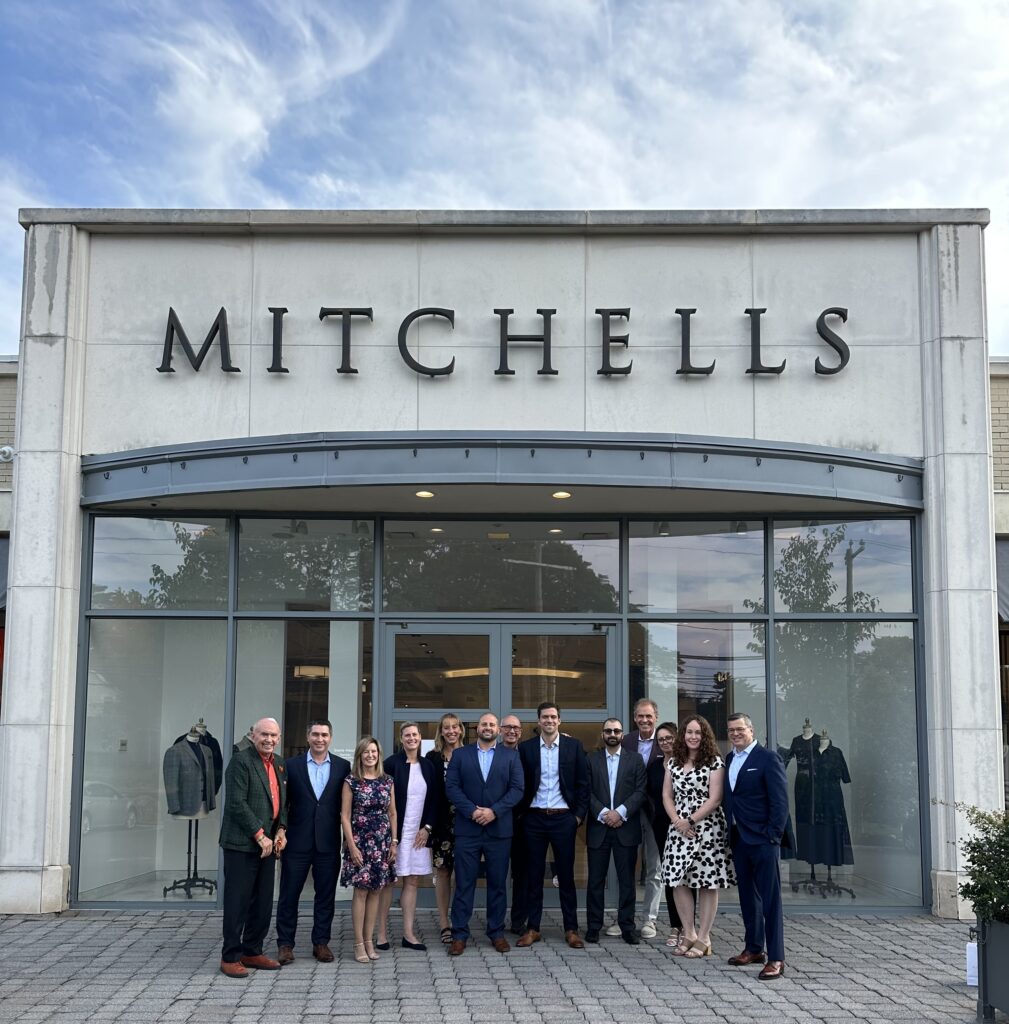
On Thursday, July 20th, RZH team members traveled to Mitchells clothing store in Westport, CT. As many of you know, Mitchells is an independent, family-owned and operated luxury retailer, known around the world for exceptional customer service with eight locations across the United States. We met with Jack Mitchell, Mitchells’ Chairman, and award-winning author of “Hug Your Customers”! Jack’s brother Bill and son Bob also accompanied us. By using small, memorable experiences to “hug your customers”, Jack shared his philosophy and decades of experience that have allowed Mitchells and their family of brands to thrive and excel in today’s challenging retail marketplace.
During our visit, we met with several generations of the Mitchells family to brainstorm ideas on enhancing RZH’s client experience and we even got a behind-the-scenes tour!
From all of us at RZH Advisors, we wish to thank Mitchells for hosting us and we can’t wait to put their ideas to use with our clients as we help them to “Embrace Life to the Full Extent of their Wealth”!
At RZH Advisors, we believe that our clients are at the heart of everything we do. We are dedicated to consistently exceeding your expectations and remain committed to helping you embrace life to the full extent of your wealth.
In pursuit of our mission, we are thrilled to introduce three new exceptional team members who have joined our firm in the last 18 months. We are confident these talented individuals will help us bolster our wealth management offering and help ensure outstanding client service and experience.
To strengthen our team we have hired the following individuals who bring a wealth of expertise and a passion for client success to RZH. We are proud to introduce:
Brendan McEwan, Senior Financial Advisor, CFP®
Brendan is a seasoned financial advisor who joined us in March 2022, after relocating to Connecticut with his wife and young daughter. Brendan brings more than twelve years of experience working with high-net-worth individuals and families, celebrities, and professional athletes. Brendan’s passion is to help clients understand complex financial topics.
At RZH, Brendan works closely with Carl and Spencer to develop our comprehensive financial plans and has been instrumental in educating our younger clientele as we embark on the single largest generational transfer of wealth in our lifetime.
Brendan is also an avid rower and competes at the Head of the Charles Regatta in Boston every year! We are thrilled to have Brendan on our team, and for those who haven’t met him yet, we’re looking forward to making an introduction very soon!
Jean Paul Atallah, Chief Operating Officer and Chief Compliance Officer
Absorbing the roles and responsibilities of business operations and compliance formerly overseen by Carl, Spencer, and Dana (before her retirement), Jean Paul joined RZH in June 2022, to consolidate these responsibilities into one department. By centralizing our operations, compliance, accounting and human resources obligations, Carl and Spencer have increased the bandwidth dedicated to our clients and their holistic wealth management needs.
Jean Paul brings more than ten years of experience in optimizing operations for large wealth management firms. He has been instrumental in fine-tuning our operations and ensuring that all our systems, resources and team members have the tools and technology needed to work efficiently and create lasting impressions with our clients.
Jean Paul is proud of his Lebanese heritage; he speaks fluent Arabic and as a life-long resident of Connecticut, remains actively involved in the large and vibrant Lebanese community in Greater Waterbury.
Rita Levon, Client Service Associate
Rita is the newest member of the RZH team, joining us in March 2023. With more than ten years of financial services and banking experience, Rita is responsible for supporting the RZH partners and financial advisors by coordinating the needs of our clients.
Prior to joining RZH, Rita was a client service associate at Union Savings Bank and Newtown Savings Bank. Her best trait is her ability to connect with people; she looks forward to building lasting relationships with our clients. She is detail-oriented and will assist Susan and Candice with various client servicing needs.
Rita is a Connecticut native, growing up in Danbury. In her spare time, she loves spending time outdoors with her two children and enjoys going to the beach, hiking, gardening, and practicing yoga.
Looking Forward to the Future
Brendan, Jean Paul, and Rita have demonstrated that they share our core values and are committed to upholding our company’s principles of exceptional client service. We are confident that their combined experience and dedication will leave a lasting impression on all RZH clients.
Before we look forward to the future, we would be remiss not to express our heartfelt gratitude and thanks to our existing team members who have contributed immensely to our success. Their unwavering commitment and hard work have been instrumental in achieving our goals, and we look forward to accomplishing even more together.
RZH Advisors remains laser-focused on client service, maintaining strong relationships, and pursuing new opportunities. To that end, we have been working diligently to incorporate new internal technologies and processes, allowing us to optimize and streamline the operational side of our business. We believe that we have some of the most cutting-edge technology in the marketplace, freeing us from operational burdens and allowing us to bring you enhanced client experiences and offerings.
Our most recent initiative is the onboarding of a state-of-the-art Client Relationship Management (“CRM”) system that will empower us with a holistic Client 360 approach. This new CRM works with our existing technology to automate certain administrative tasks, giving us more time for client interactions. We are excited about the future and confident that our expanded team and enhanced technology will greatly benefit our clients.
And finally, to our cherished clients, thank you for your ongoing trust and support during these increasingly volatile market cycles. RZH Advisors would not be the firm we are today without your support, and we look forward to many, many more years of continued partnership.
The biggest story in the markets this week was the rapid collapse of Silicon Valley Bank (SVB), the 16th largest bank in the country. This was the second-largest bank failure in US history. SVB did business primarily with the technology and venture capital industry. (If you’d like to know why this happened, please feel free to call us or read this piece by Fidelity: Click Here)
Below are a few important pieces of information for RZH clients:
RZH does not conduct business with SVB and RZH has no known exposure to this event.
The investments RZH uses for our clients do not have any direct exposure to SVB.
Our custodian, Fidelity, has informed us that the money market funds used in your accounts do not have any exposure to SVB.
As is often the case during the early stages of such an event we are dealing with incomplete and imperfect information – we will learn much more in the days ahead. However, according to Jurrien Timmer, Director of Global Macro at Fidelity, “The good news is that this seems to be an isolated incident, or at least a problem that may be limited to some smaller banks…In my view, this does not appear to be a situation that could become systemic, like the sub-prime mortgage collapse did in 2007.”
Cash deposits at US banks are insured up to $250,000 per depositor, per bank ($250,000 per person / $500,000 per couple). If you are worried about the amount of cash held at your local bank, please call us as we have other solutions available. Fidelity’s money market funds are currently yielding over 4% and we can buy short-term US Treasury bonds yielding around 5%.
RZH will be monitoring this situation closely and will keep you informed of any actions we believe are prudent or necessary. Please feel free to reach out to us with any questions or to discuss this further.
Best regards,
Carl J. Zuckerberg, CFP®, AIF®, CIMA® Principal, Chief Investment Strategist
We are thrilled to announce that RZH Advisors has been named to the WealthManagement.com inaugural “RIA Edge 100”, a selection of top independent wealth management firms!
The RIA Edge 100 identifies “firms that are seeing the most success while continuing to provide high-quality, hands-on service to an expanding client base. These are the firms that are continuing to put clients first, while they invest in their businesses and their people…”
We are honored to be included among these top independent firms (there are roughly 15,000 RIAs in the country) and affirms our commitment to providing outstanding client service. This achievement is only possible thanks to the support and confidence that our clients and business partners have placed in us.
To review the complete list and selection methodology, please click on the link to read the WealthManagement.com article below.
RZH Insights – The Stock Market in 2022 – Bumps and Bruises
Dear Clients and Friends of RZH:
After a wonderful 2021 and an all-time high reached on January 3rd, the stock market is off to one of its worst starts ever with the S&P 500 falling 9% in January. Small cap stocks have declined 14% and the tech-focused NASDAQ has dropped 15%.
All of us at RZH understand how stressful this is and why you may be worried. Volatility of this magnitude can certainly have you upset about lower portfolio values and make you potentially question your plan.
The cause of this volatility has to do with investor concerns over how the Federal Reserve (the Fed) is planning to fight inflation, which is at a 40-year high. Specifically, investors worry about the Fed’s ability to temper escalating inflation without hampering the growing economy. Some fear the Fed has been too slow to act and will launch an aggressive rate-hike strategy. And if interest rates rise significantly, they also worry the economy and corporate earnings may suffer. Higher interest rates make it more expensive for people to borrow money for purchases such as homes, cars, and major appliances. It also leads to higher costs for companies to finance new plants, equipment, and acquisitions. Cumulatively this stalls economic growth. Higher interest rates also cause the capital markets to reprice the value of all investments relative to one another – as interest rates are an important component of valuation models. And if this was not enough, there are still lingering supply chain issues, a persistent pandemic, and geopolitical tensions between Russia and Ukraine.
While the declines have been sudden, they are not unusual in order of magnitude. As noted in my December 2018 memo, 10% corrections happen about once every 15 months – it’s just that they don’t usually happen over four weeks! So, while the velocity of the decline is unusual the actual decline (9% so far) is not – relative to how stocks behave historically. Also, the stock market has typically reacted negatively to past interest rate hikes by the Fed. Because of this, we are not worried about “why” all of this is happening.
To illustrate this in more relevant context: over the last five years the global stock market is up 100% and the S&P 500 by itself is up 133%. A 10% correction is perfectly normal, healthy and is to be expected after such an extraordinary run.
Due to historically frequent corrections, it is important to avoid pinning your portfolio value to its all-time high value and then worry about losing money from that high point. The stock market fell 20% in late 2018 and 35% in early 2020. Pullbacks are simply a reality of being an equity investor. Since we accept that the stock market cannot be consistently timed by us or anyone, we believe that the only way to be sure of capturing the full premium return of stocks is to ride out their frequent but ultimately temporary declines.
So, what do we do at a time like this? We continue to work on your long-term plan and look for opportunities to be proactive. This could involve tax-loss harvesting, rebalancing, or deploying cash on the sidelines. We also stay disciplined to the RZH financial control of maintaining 5-7 years of cash flow needs invested in cash and bonds. This allows for consistency of lifestyle during volatile markets and avoids the need to sell stocks when it is not opportune to do so.
All of us at RZH understand our role as stewards and guardians of your capital and truly appreciate the faith and trust you have placed in us. Please know that we are completely focused on these events and are monitoring your portfolios and investments closely. Please feel free to reach out to us for an analysis of your personal portfolio and plan.